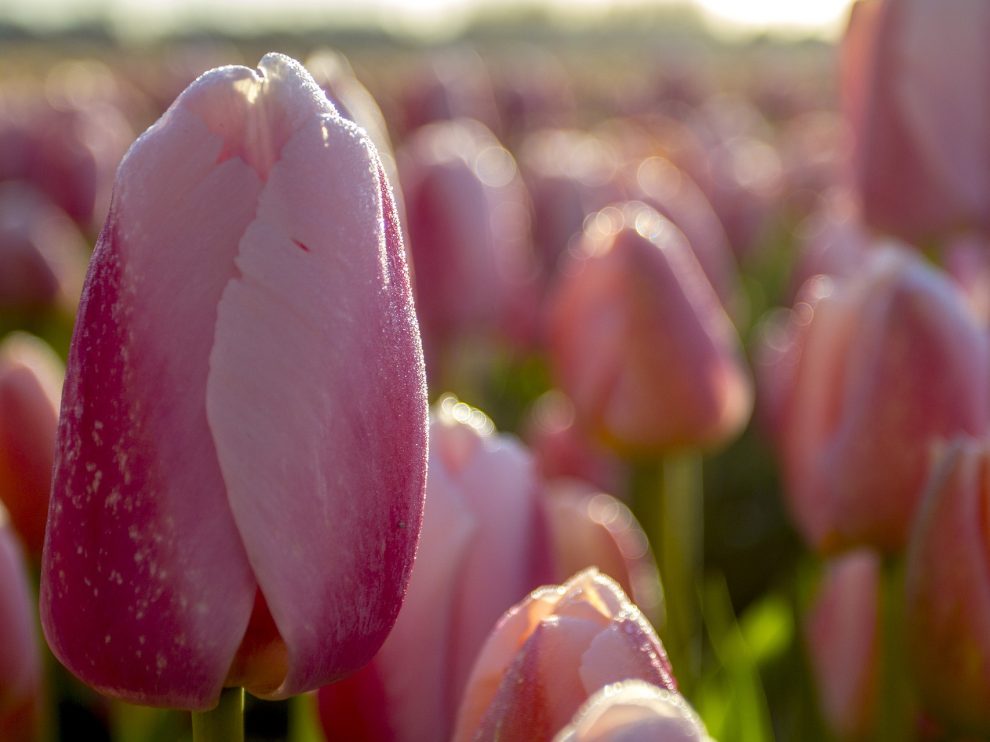
As temperatures drop and we start thinking about how to rake ALL OF THOSE LEAVES. It’s a funny thing to be concerned with the most sturdy, colorful buds of spring. October is the time for bulbs!
Whether you choose tulips, daffodils, hyacinths, snowdrops, alliums, or crocuses, now is the time to plant.
Plotting and Planning
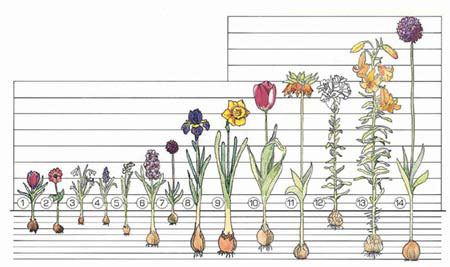
Bulbs have slightly different seasons. You should plan for when they will appear, their color, height, and distribution.
Last thing to consider, naturalizing bulbs are those that self-propagate and increase in number over the years. Your planning should consider this option for the following bulb types:
Daffodils (most varieties)Snowdrops (most varieties)Crocus (most varieties)Grape HyacinthAllium (Sphaerocephalon)
Anemonie (Blanda)
Iris (Rockgarden) (Though generally planted as a rhizome, it’s still time to plant them!)
Tulips, unfortunately, last 1 – 6 years generally and decrease dramatically each year.
Buying Bulbs
Breck’s Bulbs Planting Depth Chart
Find a reputable bulb retailer. There are many, and some are very inexpensive, but they also have smaller bulb stocks with a lower success rate. In this case, you get what you pay for. If you have the chance to buy in person, look for bulbs that are heavy for their weight (similar to shopping for garlic).
Stay away from lighter-weight bulbs, which means they may be dead or dying, or take more than one year to come up, if at all. Also, if bagged, check the general look of the actual bulbs to ensure there is no rot or mold which spreads quickly and ruins the entire group.
Our Favorites via mail order (that we have tried):
Premium & Specialty – Both located in Litchfield County, Connecticut
White Flower FarmVan Engelen, Inc
Value and Quality
DutchGrown Bulbs
Breck’s Bulbs
Michigan Bulbs
We’ve also tried major home supply/hardware stores and had a high rate of dormant/dead bulbs, so it’s hard to recommend them despite the sales. But, if you’re out of time for planting, their sale prices may make up for the ‘bulb roulette.’
Plotting out an area for Bulbs
Very conveniently, bulbs will pop up through soil and dormant grass early in the season. They do no need prepped beds. They simply need to be planted to the correct depth, which varies by the variety and species of bulb. A good rule of thumb for any bulb is that the planting instructions are to plant to a depth two times the height of the bulb itself.
Timing
Check your bulbs for planting zone and timing. A good rule of thumb in areas with cold winters is that you can plant bulbs up until the ground freezes for deeper bulbs, but it’s a risk. The first frost versus the ground freezing are two different timeframes. For hardiness zone 6, you may have up to the first week in November.
Average First Frost:
Northern NE (Maine, NH, VT): Sept 20–Oct 5
Central NE (MA, upstate NY): Sept 25–Oct 10
Southern NE (CT, RI, southern NY): Oct 5–15
Amendments
Many proclaim the value of bone meal as an amendment or fertilizer. Bone meal can be found at most hardware and garden stores. If you have heavy clay soil, you may want to add a layer of compost over the planted bulbs, which will help with fertilization and long-term improvement of the soil.
Tools
A bulb planter is a great tool to make a large amount of planting go very easily, especially on your back and knees. However, a sturdy version to use year after year can be pricey.
A bulb auger attaches to a standard automatic drill and drills a quick pocket into the soil just larger than the size of most bulbs.
If you are only planting a single bag or handful of bulbs, you may just want to use a spade.